Bridges or Walls?
The Church Has Two Options on What to Build

A number of years ago, my wife and I went on a Mediterranean cruise. It was an amazing! We have so many memories from that trip.
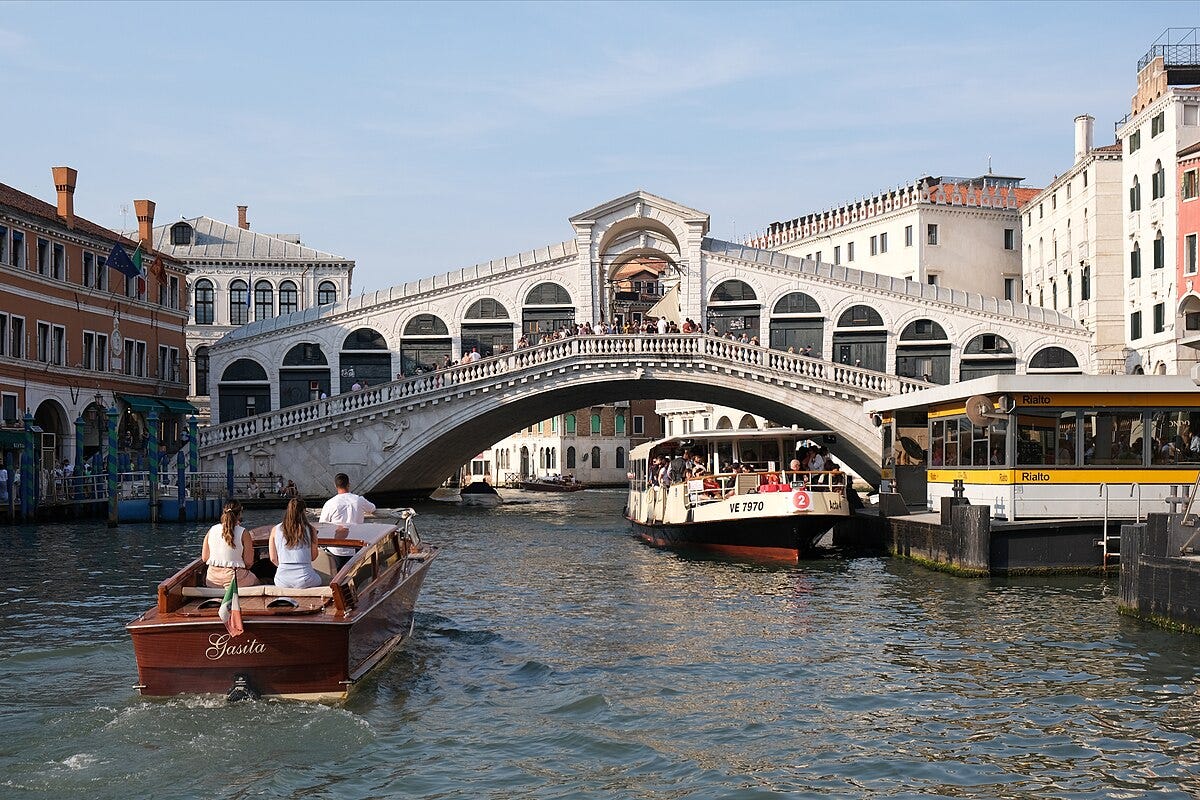
The cruise began in Venice, Italy. One of the things that Venice is known for are its ornate bridges that span across the canals. We made sure to get our obilgatory phots on the most famous of those bridges.
Our next stop was Dubrovnik, Croatia. Dubrovnik is known for its incredible walls, a sight so impressive that it was used as a location for the Game of Thrones television series.
But this is not just an opportunity for me to share about my travels. For me, these are symbols for the choice the church has today.
Building Walls
As I look at my Christian experience, I can see a variety of expressions of what the church should be building. After growing up in a liberal Anglican church, I found myself in a conservative Pentecostal church.
Looking back, that first taste of evangelicalism included a strong emphasis on building walls, on determining who was in and who was out. There were many discussions of who were not “real” Christians.
At various times this included:
People from mainline churches.
People who drank alcohol (even in moderation).
People who listened to secular rock music.
Those who believed anything other than a literal interpretation of Genesis 1.
Those who experienced same-sex attraction.
Those who embraced people with same-sex attraction.
Those who rejected the rapture.
In case you are wondering if this was a Pentecostal phenomenon, I definitely have seen this in my current Baptist tradition as well. The exact definition of the walls might vary, but the importance of the walls remains consistent.
I want to say two things about this.
One is that there is a biblical argument for this. There are definitely passages in the Old Testament that call Israel to remain apart from others and there are identity markers that help to make things clear.
The other is that there was some comfort in this. I will admit that I participated in the wall building. As long as I was on the inside, it felt good to build walls that would make the community exclusive. I felt privileged to be on the right side of the wall.
Building Bridges
Some might think that moving from wall building to bridge building is a “liberal plot” to get us to dismiss biblical injunctions to remain separate and to exclude the wrong kind of people.
But for me, it was reading the Bible that changed me.
I encourage you to read the Gospels and to ask this question: What is the emphasis of Jesus’ words and actions, to build walls or to build bridges? Not what you would prefer Jesus to have done, but what the Gospels actually say.
I see Jesus continually building bridges, seeking to reach more people, and insisting on hanging out with the “wrong kind” of people. I also see Jesus continually knocking down the walls that others had built. And those same people criticized Jesus for building bridges rather than walls.
But this is not just Jesus.
As I read Acts and Paul, I see that there was a tension between the wall builders and the bridge builders. I also see Acts and Paul putting the bridge building as the action that was consistent with God’s plans.
I am not saying that there is no consideration of identity markers in the New Testament. There is indeed.
What I am saying is that the posture that is focused on in the New Testament is one of bridge building. This is what we see Paul doing in Acts 17. This is what Paul is doing in 1 Corinthians.
The Challenge
We can sub-divide the Christian churches in many ways. However, I think the pressing division is that of those who want to put our primary effort into building walls to keep certain people out (including other Christians) and those who want to put our primary effort into building bridges to others, bridges to Christians with different interpretations and practices and bridges to non-Christians.
There is a tremendous temptation to build walls and to build them higher and stronger. In our increasingly polarized world this becoming more and more popular.
But to quote the Christian trend from decades ago: “What would Jesus do?”